Electric Vehicles & Battery

CAN FD data logging for EV battery, BMS and motor controller development

Modern EV development runs on CAN FD and high-voltage instrumentation. Built around REXGEN 2 for BMS and motor controller traffic at up to 8 Mbit/s. Paired with K-TC thermocouples rated for 780V isolation on CAN bus for cell, busbar and pack-level thermal monitoring in high-voltage battery test environments.

Recommended product

REXGEN 2 + K-TC: HV-safe logging for EV battery and powertrain

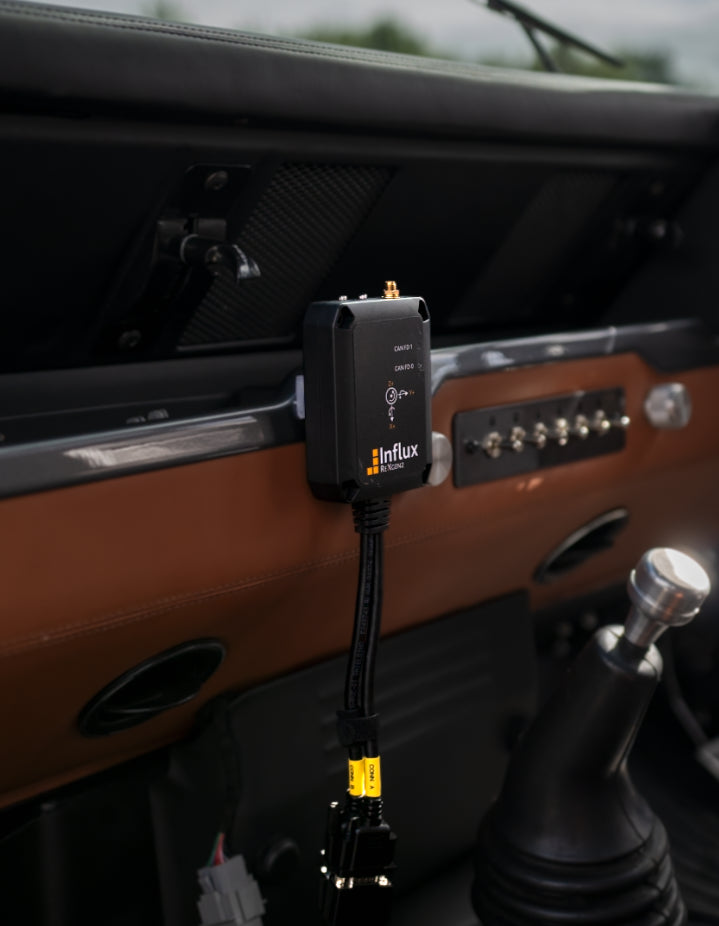
Two CAN FD channels at up to 8 Mbit/s for BMS and motor controller traffic, paired with K-TC thermocouples rated for 780V isolation on CAN bus and 840V on USB. Built for modern EV battery, powertrain and full-vehicle integration work where high-voltage systems are present at the measurement point.

CAN FD up to 8 Mbit/s for BMS

Two CAN FD channels handle modern BMS and motor controller traffic without dropped frames. Built for the high-bandwidth cell voltage, balancing and temperature reporting that legacy CAN 2.0 cannot capture.

780V isolation on K-TC

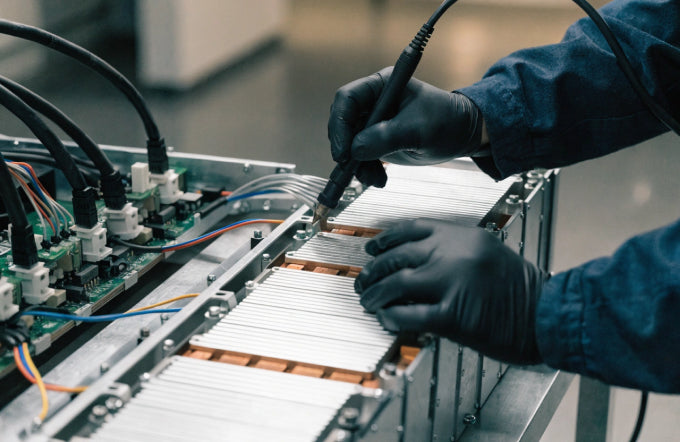
K-TC thermocouple module provides galvanic isolation rated at 780V on the CAN bus, 840V on USB and 560V on power. Designed for K-type thermocouple measurement near high-voltage battery cells and in-pack thermal validation.

Pairs with REBEL CT for chassis-side EV work

Add REBEL CT alongside REXGEN 2 where the test programme also covers LIN body networks or needs more buses on one clock. REBEL CT provides two CAN 2.0, two CAN FD and two LIN buses, with 4 analogue inputs for supplementary signal capture.

IP65, climate-chamber ready

-40C to +85C operating range. Survives the bench, the climate chamber, the test vehicle and the validation cell. Non-removable eMMC with 100% power-safe logging eliminates SD card thermal failure modes that plague long-duration battery durability runs.

The challenge

What makes EV data acquisition difficult

Electric vehicle development has measurement requirements that legacy automotive instrumentation was not built for.

High-voltage measurement safety

Battery pack development requires thermocouple measurement near cells at hundreds of volts (typically 400V to 800V). Standard non-isolated instrumentation can short across cells or expose the engineer to hazardous voltage paths. Galvanic isolation rated for the cell voltage is not optional.

CAN FD bandwidth on BMS

Modern BMS implementations push cell voltage, balancing and temperature reporting onto CAN FD at multi-megabit rates. CAN 2.0 only loggers cannot capture this traffic. Logger choice is gated by CAN FD support.

Battery validation runs for weeks

Cell ageing, thermal cycling, fast-charge and durability programmes run continuously over weeks and months. Loggers need power-safe writes and storage that does not corrupt on a single bad shutdown or thermal event during a long cell-life programme.

Applications

How EV development teams use Influx Technology hardware

Battery development, motor controller calibration and full-vehicle integration all draw on the same hardware platform with different sensor configurations.

CAN FD BMS traffic plus HV-isolated thermal measurement
Battery and BMS development

CAN FD BMS traffic plus HV-isolated thermal measurement

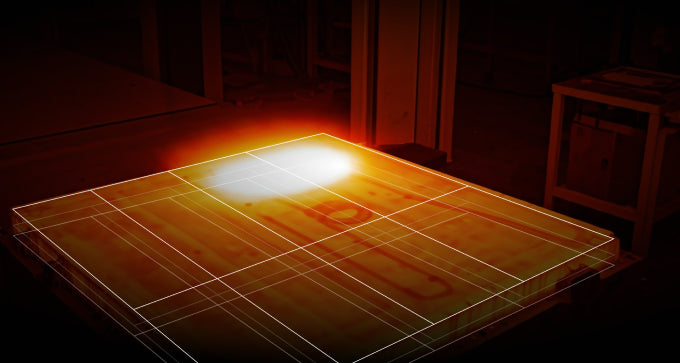
REXGEN 2 captures CAN FD BMS traffic at up to 8 Mbit/s, including cell voltage, balancing, temperature and state-of-charge reporting. K-TC adds K-type thermocouple measurement with 780V isolation rated for in-pack thermal validation, fast-charge studies and cell durability programmes.

REXGEN 2K-TC
Multi-bus CAN, CAN FD and XCP for full-vehicle work
Motor controller, inverter and chassis integration

Multi-bus CAN, CAN FD and XCP for full-vehicle work

Pair REXGEN 2 with REBEL CT where chassis and body networks are in the test plan. REBEL CT brings two CAN 2.0, two CAN FD and two LIN buses, with native XCP, CCP and UDS support and 4 analogue inputs for supplementary signal capture.

REXGEN 2REBEL CT
Permanent install for fleet validation programmes
Battery warranty and field validation

Permanent install for fleet validation programmes

REXGEN Air for permanent install on EV validation fleets and pilot programmes. Non-removable eMMC up to 32 GB with 100% power-safe logging captures the full battery life cycle. Has been deployed for battery supplier warranty monitoring across operational fleets.

REXGEN Air

Recommended hardware

Hardware for electric vehicle development

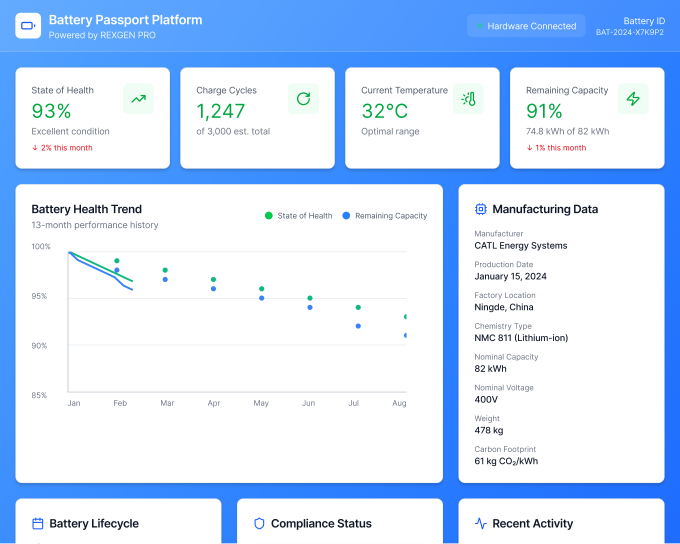
REXGEN 2 is the recommended starting point for EV bench and vehicle work. K-TC is the critical instrumentation pairing for high-voltage thermal measurement on cells, busbars and pack assemblies. REBEL CT adds two CAN 2.0, two CAN FD and two LIN buses for chassis-side EV development work. REXGEN Pro adds on-vehicle edge compute for battery passport, driver style scoring and OTA application updates.

Browse all products
REXGEN 2
Primary recommendation CAN BUS Data Loggers

REXGEN 2

2x CAN FD at up to 8 Mbit/s plus LIN. 8 GB or 16 GB eMMC with 100% power-safe logging. Optional integrated 6-axis IMU and 18 Hz GNSS in the IMU configuration. IP65 sealed, -40C to +85C operating range. Pre and post-event capture for fault investigation. Designed for the EV bench, climate chamber and test vehicle alike.

From £549
K-TC
K-TC
Instrumentation

K-TC

CAN-output K-type thermocouple module with 780V isolation on CAN bus, 840V on USB and 560V on power. Up to 32 channels, K, J and T...

From £1,299
REBEL CT
REBEL CT
CAN BUS Data Loggers

REBEL CT

Two CAN 2.0, two CAN FD and two LIN buses for EV chassis-side development. Native XCP on CAN, CCP, UDS (ISO 14229), OBD and SAE...

£1,899
REXGEN Pro
REXGEN Pro
CAN BUS Data Loggers

REXGEN Pro

Edge platform for EV battery passport, driver style scoring for range optimisation, OTA module updates and on-vehicle diagnostics. Deterministic CAN FD capture underneath, vehicle applications...

On request

Planning an EV development programme?

Our applications engineers work with EV battery teams, powertrain integrators and vehicle dynamics groups. Describe your test phase and signal requirements.

What engineers say

Trusted by engineering teams

For our research on real driving emissions (RDE) of low-carbon fuels, we use two vehicles: an EURO 6c compliant diesel hybrid (Mercedes C300h) and an EURO 5 gasoline hybrid (Toyota Prius). We require data on various parameters like engine speed, fuel consumption, battery charge, and exhaust temperatures. Our current data loggers couldn't capture all parameters for the Mercedes via the OBD port. Influx Technology intervened, scanning the vehicle to create a custom data logger, enabling us to measure essential parameters for emissions research alongside driving and engine data.

Leeds University

School of Chemical and Process Engineering

We have taken logs just using the USB power and I'm quite happy that the temperature measurement is comparable to the kit we're using currently, within 1°C

Powermotive

Software ecosystem

Configure and analyse battery and powertrain data

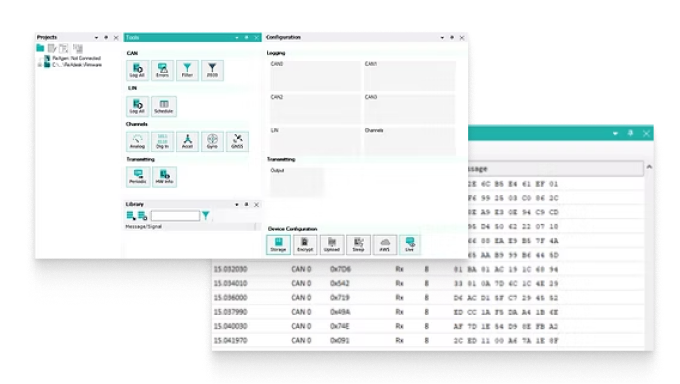
REXGEN 2 ships with REXDESK for CAN FD configuration, DBC import and BMS or motor controller trace analysis. K-TC pairs with K-CAL for thermocouple calibration with a live oscilloscope view. Every Influx Technology data logger and instrumentation module ships with free companion software. No licence fees, no per-seat charges, no annual subscription costs.

Explore REXDESK
REXDESK

CAN FD configuration, DBC import, BMS and motor controller trace analysis

DIALOG

REBEL configuration, XCP/CCP setup, CAN and LIN trace analysis

K-CAL

Thermocouple and sensor calibration with live oscilloscope view

Module Analyser

Diagnostics and firmware updates for K-Series modules

Why Influx Technology

What sets us apart

Built, tested and supported from one site at the heart of UK automotive testing.

Millbrook Proving Ground

Our UK headquarters sit within one of Europe's leading vehicle test facilities. We develop and validate hardware in real test conditions.

Direct engineering support

Your enquiry is handled by the engineers who designed the hardware. No reseller layer, no third-party support desk.

Full-stack control

Hardware design, firmware, desktop software and cloud platform all developed in-house. No third-party dependencies in the signal chain.

Free software, no licence fees

REXDESK, K-CAL and DIALOG are free with every hardware purchase. No per-seat charges, no annual renewals.

Frequently asked questions

EV and battery data logging

Can REXGEN loggers record CAN FD data from EV BMS networks?

Yes. REXGEN 2 supports CAN FD at up to 8 Mbit/s, which is used by most modern BMS implementations for high-bandwidth cell voltage, balancing and temperature reporting. Two independent CAN FD channels allow simultaneous logging of BMS and motor controller buses on the same time base.

Is the K-TC thermocouple module safe for use near high-voltage battery systems?

The K-TC provides galvanic isolation rated at 780V on the CAN bus, 840V on the USB port and 560V on the power supply. These isolation ratings are designed for K-type thermocouple measurement in environments with high-voltage battery systems present at the measurement point.

How do I log data from an EV for battery warranty validation?

REXGEN Air provides non-removable eMMC storage up to 32 GB with 100% power-safe logging, ensuring zero message loss throughout the vehicle lifetime. Data uploads automatically via LTE when connectivity is available. This configuration has been deployed for battery supplier warranty monitoring programmes across operational EV fleets.

Can REBEL CT log CAN FD?

Yes. REBEL CT CAN FD logs two CAN FD buses in ISO and non-ISO standard frames alongside two CAN 2.0 buses and two LIN channels, so EV BMS and motor controller traffic lands on the same timeline as the rest of the vehicle.

What is the difference between REXGEN 2 and REBEL CT for EV development?

REXGEN 2 is the compact sealed logger for BMS and motor controller work: 2 CAN FD channels at up to 8 Mbit/s, IP65 sealed, climate-chamber ready. REBEL CT is the multi-bus chassis logger for full-vehicle integration: two CAN 2.0, two CAN FD and two LIN channels, with native XCP, CCP and UDS support and a CAN 2.0 gateway whilst logging. Many EV programmes use both: REXGEN 2 for the battery and motor controller side, REBEL CT for the chassis side.

What is REXGEN Pro and when does it fit EV development?

REXGEN Pro is the edge platform in the Influx Technology range: deterministic CAN FD capture underneath, on-vehicle applications above. For EV development, REXGEN Pro fits OEMs running programme-grade edge platforms: battery passport (a regulatory requirement coming into force in the EU), driver style scoring for range optimisation, OTA module updates and on-vehicle diagnostics. REXGEN 2 handles capture-and-stream. REXGEN Pro handles capture-and-compute. The two are commonly deployed together on the same EV programme for different jobs. REXGEN Pro is enquiry-only, so discuss your application with our engineering team.

Tell us about your EV development programme

Describe the vehicle or battery test setup, the networks in scope and the thermal and analog measurement points. Our applications engineers will scope the right logger and instrumentation configuration.